
Free Shipping over $75 within the contiguous US


Botanical Name: Copaiba officinalis
Description: Copaiba oil resin and essential oil was first recorded in European medicine journals in 1625. It has long been used by the indigenous people of the Amazon jungles. Researchers have found that the oil-resin of copaiba has anti-inflammatory properties. These properties have been shown to be two times higher than that found in diclofenac sodium, one of the most widely used anti-inflammatory drugs in the market.
Parts Used: Resin, bark extracted from the bark of Copaiba tree
Color: Clear and colorless
Consistency: Thin
Extraction Method: Cold pressed
Note Classification: Base
Aroma Description: Warm, honey-like scent. It is rich and pleasant; it is easily identifiable as a base note.
Aroma Strength: Medium
Blends Well With: Rose, Jasmine, Sandalwood, Frankincense, Ylang-ylang and Vanilla
Origin: Brazil
Cultivation: Organic
These statements have not been evaluated by the Food and Drug Administration. This product is not intended to diagnose, treat, cure or prevent any disease.
Dilute by the drop: Essential oils are very strong and must be diluted (usually in a carrier oil) or incorporated into something like a massage oil, lotion, or aroma spray. The essential content should only account for 0.5-2% of the total blend.
Care Tips For Your Essential Oils: Store with cap closed tightly in a cool dark space and away from light. Keep away from direct heat or open flame. If stored correctly, essential oils will last 1-4 years.
Safety Tips For Your Essential Oils: Always use essential oils with caution. Inhalation or prolonged exposure may cause dizziness, nausea, and headaches. Only use essential oils by the drop and always dilute. Before topical use, always perform a skin patch test. Keep essentials out of reach of children and pets. Not recommended for internal use. Do not apply to eyes or mouth.
| Size | 15 ml (300 drops) |
| Volume |
 Certified Organic
Copaiba Organic Essential Oil - 15ml is backordered and will ship as soon as it is back in stock.
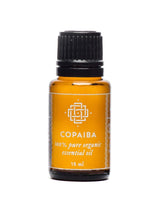
Often used topically to support all types of skin issues, Copaiba oil is a base note with a woody, sweet and balsamic scent. This oil can be used diffused to create a calming, grounding atmosphere, blended into massage oil, and added to your skincare routine. It blends well with cedarwood, lavender, ylang-ylang, and jasmine.
Botanical Name: Copaiba officinalis
Description: Copaiba oil resin and essential oil was first recorded in European medicine journals in 1625. It has long been used by the indigenous people of the Amazon jungles. Researchers have found that the oil-resin of copaiba has anti-inflammatory properties. These properties have been shown to be two times higher than that found in diclofenac sodium, one of the most widely used anti-inflammatory drugs in the market.
Parts Used: Resin, bark extracted from the bark of Copaiba tree
Color: Clear and colorless
Consistency: Thin
Extraction Method: Cold pressed
Note Classification: Base
Aroma Description: Warm, honey-like scent. It is rich and pleasant; it is easily identifiable as a base note.
Aroma Strength: Medium
Blends Well With: Rose, Jasmine, Sandalwood, Frankincense, Ylang-ylang and Vanilla
Origin: Brazil
Cultivation: Organic
These statements have not been evaluated by the Food and Drug Administration. This product is not intended to diagnose, treat, cure or prevent any disease.
Dilute by the drop: Essential oils are very strong and must be diluted (usually in a carrier oil) or incorporated into something like a massage oil, lotion, or aroma spray. The essential content should only account for 0.5-2% of the total blend.
Care Tips For Your Essential Oils: Store with cap closed tightly in a cool dark space and away from light. Keep away from direct heat or open flame. If stored correctly, essential oils will last 1-4 years.
Safety Tips For Your Essential Oils: Always use essential oils with caution. Inhalation or prolonged exposure may cause dizziness, nausea, and headaches. Only use essential oils by the drop and always dilute. Before topical use, always perform a skin patch test. Keep essentials out of reach of children and pets. Not recommended for internal use. Do not apply to eyes or mouth.
| Size | 15 ml (300 drops) |
| Volume |

Copaiba Organic Essential Oil - 15ml

Copaiba Organic Essential Oil - 15ml is backordered and will ship as soon as it is back in stock.
 Fair and ethically traded products
Offering authentic, sustainable products that support artisans, their families, and indigenous ways
Learn More... Providing a connection to the sacred arts of indigenous communities
Consciously serving our community for over 22 years with integrity and passion
Learn More... Living in harmony with each other and our earth
Reducing our use of resources with Earth conscious shipping and packaging practices
Learn More...
Often used topically to support all types of skin issues, Copaiba oil is a base note with a woody, sweet and balsamic scent. This oil can be used diffused to create a calming, grounding atmosphere, blended into massage oil, and added to your skincare routine. It blends well with cedarwood, lavender, ylang-ylang, and jasmine.

