
Free Shipping over $75 within the contiguous US


Botanical Name: Boswellia Serrata
Description: A milky-white resin produced by a scrubby, unlikely looking tree, genus Boswellia. There are twenty-five known species of Boswellia, each creating a water-soluble gum-resin with its own distinctive fragrance and medicinal properties.
History: Widely known as an historic biblical ingredient, as one of three gifts from the visiting Magi to the newborn Jesus and as an ingredient in the Old Testament's Exodus incense mixture. Few have experienced its aroma though, or know of its rich history and how the world has treasured and used it since long before recorded time. Frankincense has been one of the world's most treasured commodities since the beginning of written history. At its peak its value rivaled that of gold, the rarest silks, and the most precious of gems. Recent studies by an international team of scientists, including researchers from Johns Hopkins University and the Hebrew University in Jerusalem, have indicated that burning frankincense resin helps to support relief from anxiety and depression. The University of Munich found the anti-inflammatory properties of frankincense very effective as a treatment for joint pain and arthritis. The famous eleventh-century Arabian physician, Avicenna, recommended its cooling effects as a remedy for infections and illnesses that increase the body's temperature. Greek and Roman physicians used frankincense in the treatment of a great variety of diseases. Frankincense remedies appear in the Syriac Book of Medicine, ancient Muslim texts, and in Ayurvedic and Chinese medical writings.
Properties: Slows and deepens breathing and has been used since ancient times to awaken higher consciousness, and enhance spirituality, meditation and prayer.
Benefits: Used as an antiseptic, astringent, carminative, digestive, diuretic, sedative, tonic and expectorant. Frankincense Essential Oil is also believed to encourage a meditative state bringing balance and peace to individuals. Thought of as a sacred scent. It is known to have remarkable rejuvenating and healing properties.
Parts Used: Resin
Color: Colorless to pale yellow clear liquid
Consistency: Medium
Extraction Method: Steam Distillation
Note Classification: Base
Aroma: Fresh, fruity, pine-lemon bouquet with delicately sweet, resinous and woody undertones
Strength of Aroma: Medium
Blends Well With: Basil, Bergamot, Cardamom, Cedarwood, Chamomile, Cinnamon Bark, Clary Sage, Coriander, Geranium, Ginger, Myrrh and Vanilla.
Safety Data: Non-toxic, non-irritating and non-sensitizing. Not for internal use.
-
These statements have not been evaluated by the Food and Drug Administration. This product is not intended to diagnose, treat, cure or prevent any disease.
Dilute by the drop: Essential oils are very strong and must be diluted (usually in a carrier oil) or incorporated into something like a massage oil, lotion, or aroma spray. The essential content should only account for 0.5-2% of the total blend.
Care Tips For Your Essential Oils: Store with cap closed tightly in a cool dark space and away from light. Keep away from direct heat or open flame. If stored correctly, essential oils will last 1-4 years.
Safety Tips For Your Essential Oils: Always use essential oils with caution. Inhalation or prolonged exposure may cause dizziness, nausea, and headaches. Only use essential oils by the drop and always dilute. Before topical use, always perform a skin patch test. Keep essentials out of reach of children and pets. Not recommended for internal use. Do not apply to eyes or mouth.
| Size | 15 ml (300 drops) |
| Volume |
 Certified Organic
Frankincense Organic Essential Oil - 15 ml is backordered and will ship as soon as it is back in stock.
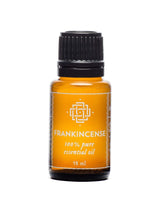
With it's woodsy and grounding aroma, Frankincense is the quintessential fragrance. It has a great association with spiritual practice, more than any other substance on Earth. Frankincense is the resin of the sacred Boswellia tree and has been used since ancient times by the civilizations of Egypt, Africa, and Mesopotamia. It is also the famous incense from the Bible thought to awaken a feeling of union with the divine. With a characteristic purifying and relaxing quality, its character is thought to strengthen willpower, self-confidence, and determination.
Botanical Name: Boswellia Serrata
Description: A milky-white resin produced by a scrubby, unlikely looking tree, genus Boswellia. There are twenty-five known species of Boswellia, each creating a water-soluble gum-resin with its own distinctive fragrance and medicinal properties.
History: Widely known as an historic biblical ingredient, as one of three gifts from the visiting Magi to the newborn Jesus and as an ingredient in the Old Testament's Exodus incense mixture. Few have experienced its aroma though, or know of its rich history and how the world has treasured and used it since long before recorded time. Frankincense has been one of the world's most treasured commodities since the beginning of written history. At its peak its value rivaled that of gold, the rarest silks, and the most precious of gems. Recent studies by an international team of scientists, including researchers from Johns Hopkins University and the Hebrew University in Jerusalem, have indicated that burning frankincense resin helps to support relief from anxiety and depression. The University of Munich found the anti-inflammatory properties of frankincense very effective as a treatment for joint pain and arthritis. The famous eleventh-century Arabian physician, Avicenna, recommended its cooling effects as a remedy for infections and illnesses that increase the body's temperature. Greek and Roman physicians used frankincense in the treatment of a great variety of diseases. Frankincense remedies appear in the Syriac Book of Medicine, ancient Muslim texts, and in Ayurvedic and Chinese medical writings.
Properties: Slows and deepens breathing and has been used since ancient times to awaken higher consciousness, and enhance spirituality, meditation and prayer.
Benefits: Used as an antiseptic, astringent, carminative, digestive, diuretic, sedative, tonic and expectorant. Frankincense Essential Oil is also believed to encourage a meditative state bringing balance and peace to individuals. Thought of as a sacred scent. It is known to have remarkable rejuvenating and healing properties.
Parts Used: Resin
Color: Colorless to pale yellow clear liquid
Consistency: Medium
Extraction Method: Steam Distillation
Note Classification: Base
Aroma: Fresh, fruity, pine-lemon bouquet with delicately sweet, resinous and woody undertones
Strength of Aroma: Medium
Blends Well With: Basil, Bergamot, Cardamom, Cedarwood, Chamomile, Cinnamon Bark, Clary Sage, Coriander, Geranium, Ginger, Myrrh and Vanilla.
Safety Data: Non-toxic, non-irritating and non-sensitizing. Not for internal use.
-
These statements have not been evaluated by the Food and Drug Administration. This product is not intended to diagnose, treat, cure or prevent any disease.
Dilute by the drop: Essential oils are very strong and must be diluted (usually in a carrier oil) or incorporated into something like a massage oil, lotion, or aroma spray. The essential content should only account for 0.5-2% of the total blend.
Care Tips For Your Essential Oils: Store with cap closed tightly in a cool dark space and away from light. Keep away from direct heat or open flame. If stored correctly, essential oils will last 1-4 years.
Safety Tips For Your Essential Oils: Always use essential oils with caution. Inhalation or prolonged exposure may cause dizziness, nausea, and headaches. Only use essential oils by the drop and always dilute. Before topical use, always perform a skin patch test. Keep essentials out of reach of children and pets. Not recommended for internal use. Do not apply to eyes or mouth.
| Size | 15 ml (300 drops) |
| Volume |

Frankincense Organic Essential Oil - 15 ml

Frankincense Organic Essential Oil - 15 ml is backordered and will ship as soon as it is back in stock.
 Fair and ethically traded products
Offering authentic, sustainable products that support artisans, their families, and indigenous ways
Learn More... Providing a connection to the sacred arts of indigenous communities
Consciously serving our community for over 22 years with integrity and passion
Learn More... Living in harmony with each other and our earth
Reducing our use of resources with Earth conscious shipping and packaging practices
Learn More...
With it's woodsy and grounding aroma, Frankincense is the quintessential fragrance. It has a great association with spiritual practice, more than any other substance on Earth. Frankincense is the resin of the sacred Boswellia tree and has been used since ancient times by the civilizations of Egypt, Africa, and Mesopotamia. It is also the famous incense from the Bible thought to awaken a feeling of union with the divine. With a characteristic purifying and relaxing quality, its character is thought to strengthen willpower, self-confidence, and determination.

