
Free Shipping over $75 within the contiguous US


The aroma of burnt copal is said to not only fortify and invigorate the body, but also soothe the mind and relieve symptoms of anxiety, stress, and even depression. There is however no essential oil derived from the distillation of copal, and the practice of distilling its essence is not commonplace, so all aroma-therapeutic applications for it subside in its being employed as an incense.
Metaphysical Properties & Uses Both true and false copal's greatest and perhaps most prolific employment remains in the field of the esoteric, where it has been employed since time immemorial as an offertory incense and deistic tribute. The Mayas, Aztecs, and other neighboring First Peoples Nations have long-employed copal as incense for their deities, even so far as shaping the easily-carved substance into ears of maize and other shapes considered sacred by their society and religion. The Plains Native Americans such as the Sioux and the Apache used to trade other goods such as spear points for copal, which was used extensively and exclusively in sweat lodge rituals. Both true and false copal (tribal societies of the time placed no true distinction or importance in the distinction of either) was believed to be the 'food of the gods' just as maize was considered the food of humans. With the later influx of Christian-oriented belief systems, the practice of using copal for rituals remained, albeit it was integrated into Church services, where it played the role of frankincense, then a highly expensive and almost impossible-to-procure commodity for the growing Churches in the New World. Because Christian-oriented belief systems employ incense not only as an offertory item for their god, but also believe it to be placating substance for the spirits of the deceased, its purpose then hybridized with the remnants of animalistic culture and, to this day, both true and false copal are strongly employed in the Dia de Los Muertos or Day of the Dead, particularly in Mexico and its neighboring areas as a means to 'ferry the dead and direct them to the afterlife as well as to placate the troubled and restless dead. This may suggest that copal can be employed for exorcism rites and rituals, although, the Catholic Rite, being exacting, always calls for frankincense for such rituals. This does not preclude the possibility that the hybridized tribal-Christian religion that arose after the Spanish Conquest would not prescribe its use for just such purposes, as remnants of tribal societies that exist to this day employ copal for banishing, smudging, cleansing, and exorcism.
Shamans Market
 Eco Packaging
Copal Resin Incense - Blanco White - 1 oz is backordered and will ship as soon as it is back in stock.
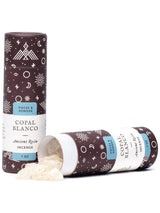

Copal is sacred to the indigenous cultures of the Central and South Americas. It is burned year-round in the churches in Mexico but is best known for its use in homes during the Day of the Dead. It is said that the familiar scent of Copal helps the souls find their way back during their annual visit home. This copal has a light, sweet, and very pleasant aroma with notes of light citrus. It can be used for inspiration, attraction, invocation, happiness, and celebration.
Choice of 1 oz tube or 4 oz and 1 lb bag. Product of Indonesia.
New to resin incense? Read more on our blog: Resin Incense: What Is It & How To Burn it
PLEASE NOTE: Due to a supply issue, the packaging for 1 oz resin tubes may temporarily vary from the photo. They will be packaged in a plain cardboard tube.
The aroma of burnt copal is said to not only fortify and invigorate the body, but also soothe the mind and relieve symptoms of anxiety, stress, and even depression. There is however no essential oil derived from the distillation of copal, and the practice of distilling its essence is not commonplace, so all aroma-therapeutic applications for it subside in its being employed as an incense.
Metaphysical Properties & Uses Both true and false copal's greatest and perhaps most prolific employment remains in the field of the esoteric, where it has been employed since time immemorial as an offertory incense and deistic tribute. The Mayas, Aztecs, and other neighboring First Peoples Nations have long-employed copal as incense for their deities, even so far as shaping the easily-carved substance into ears of maize and other shapes considered sacred by their society and religion. The Plains Native Americans such as the Sioux and the Apache used to trade other goods such as spear points for copal, which was used extensively and exclusively in sweat lodge rituals. Both true and false copal (tribal societies of the time placed no true distinction or importance in the distinction of either) was believed to be the 'food of the gods' just as maize was considered the food of humans. With the later influx of Christian-oriented belief systems, the practice of using copal for rituals remained, albeit it was integrated into Church services, where it played the role of frankincense, then a highly expensive and almost impossible-to-procure commodity for the growing Churches in the New World. Because Christian-oriented belief systems employ incense not only as an offertory item for their god, but also believe it to be placating substance for the spirits of the deceased, its purpose then hybridized with the remnants of animalistic culture and, to this day, both true and false copal are strongly employed in the Dia de Los Muertos or Day of the Dead, particularly in Mexico and its neighboring areas as a means to 'ferry the dead and direct them to the afterlife as well as to placate the troubled and restless dead. This may suggest that copal can be employed for exorcism rites and rituals, although, the Catholic Rite, being exacting, always calls for frankincense for such rituals. This does not preclude the possibility that the hybridized tribal-Christian religion that arose after the Spanish Conquest would not prescribe its use for just such purposes, as remnants of tribal societies that exist to this day employ copal for banishing, smudging, cleansing, and exorcism.
Shamans Market

Copal Resin Incense - Blanco White

Copal Resin Incense - Blanco White - 1 oz is backordered and will ship as soon as it is back in stock.
 Fair and ethically traded products
Offering authentic, sustainable products that support artisans, their families, and indigenous ways
Learn More... Providing a connection to the sacred arts of indigenous communities
Consciously serving our community for over 22 years with integrity and passion
Learn More... Living in harmony with each other and our earth
Reducing our use of resources with Earth conscious shipping and packaging practices
Learn More...
Copal is sacred to the indigenous cultures of the Central and South Americas. It is burned year-round in the churches in Mexico but is best known for its use in homes during the Day of the Dead. It is said that the familiar scent of Copal helps the souls find their way back during their annual visit home. This copal has a light, sweet, and very pleasant aroma with notes of light citrus. It can be used for inspiration, attraction, invocation, happiness, and celebration.
Choice of 1 oz tube or 4 oz and 1 lb bag. Product of Indonesia.
New to resin incense? Read more on our blog: Resin Incense: What Is It & How To Burn it
PLEASE NOTE: Due to a supply issue, the packaging for 1 oz resin tubes may temporarily vary from the photo. They will be packaged in a plain cardboard tube.
Size
